









As eye surgery becomes so common that celebrities openly discussing it is no longer awkward, the barrier to entry for such procedures is significantly lowering. While the demand for eye surgery continues to rise steadily, there's also a growing number of people undergoing eye revision surgery, necessitating particular caution.
Eye revision surgery can be considered when one is dissatisfied with the surgical outcome or experiences side effects after the initial procedure. The reasons for revision vary from person to person, but a common example of eye revision surgery is for ‘sausage eyes’. Sausage eyes refer to a condition where the double eyelid line is excessively high or thick after surgery, making it appear swollen.
This is primarily caused by designing the double eyelid line too high and deep, or by not sufficiently removing unnecessary fat or skin tissue. If the muscles that open the eyes adhere in this state, sausage eyes can occur. To resolve this, depending on the cause of the sausage eyes, fat removal or releasing the existing double eyelid adhesion to adjust the line's height is necessary to create a natural line.
In addition, eye revision surgery may be considered for issues such as left-right asymmetry, a double eyelid line that is too high or too low, a line that has faded or come undone, multiple overlapping lines, or severe scarring. If you are considering eye revision surgery due to these problems, it is crucial to accurately identify the issues from the previous surgery and proceed with a customized procedure that improves both aesthetic and functional aspects.
If significant scarring remains, unnecessary scar tissue should be removed before redefining the line. If the double eyelid has come undone or there is left-right asymmetry, ptosis correction surgery should be performed concurrently for correction. In particular, a high level of satisfaction can be expected if the desired line or shape is clearly understood and designed according to the patient's wishes.
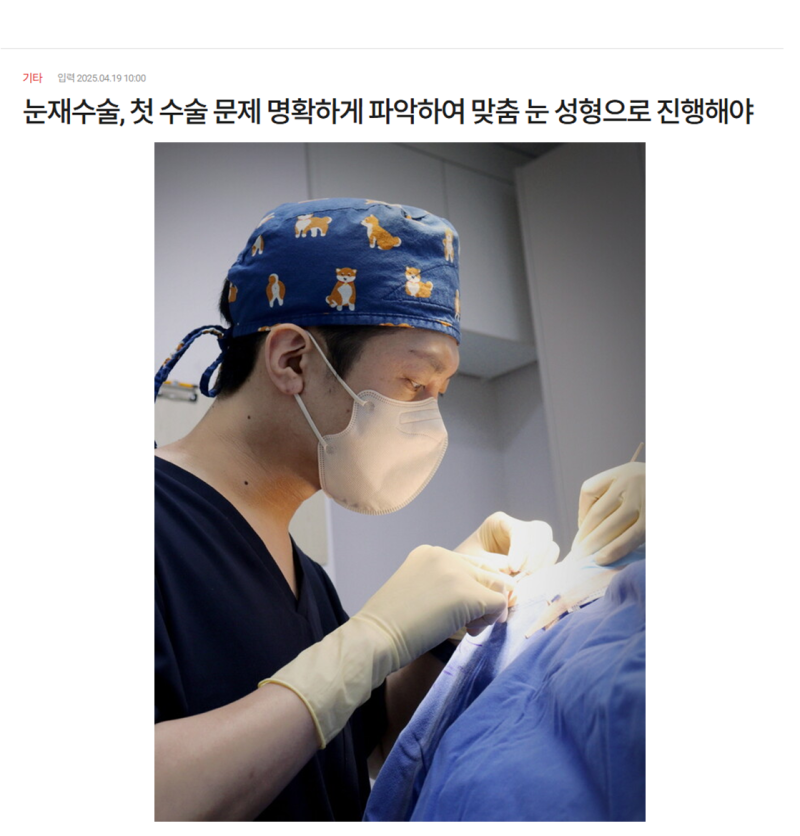
Dr. Kim Hong-jin of 1mm Plastic Surgery explained, “Eye revision surgery involves dealing with tissue already damaged by previous eye surgery. To prevent further revisions, it is crucial to accurately identify the root cause of the problems from the last surgery and develop a surgical plan to address them. Since it is a more difficult and complex procedure than the first eye surgery, the surgeon must have the ability to clearly understand and resolve the issues from the initial surgery.”
He continued, “Therefore, I recommend proceeding with sufficient consultation with a plastic surgeon who has extensive experience in eye revision surgery and rich medical knowledge. It is important to conduct a 1:1 consultation and examination to meticulously understand the individual's eye characteristics, skin laxity, and scar condition, and then proceed with a customized surgical plan.”
Source: Medisobiza News (http://www.medisobizanews.com)