







Dissatisfaction with surgical results or side effects… diverse causes, must find the root cause first |
‘Eye surgery’, now a popular cosmetic procedure, can bring about significant image changes with even subtle alterations. Consequently, demand continues to grow steadily. However, it is important to note that cases of eye reoperations due to various reasons are also increasing.
Eye reoperation is seriously considered when there is dissatisfaction with the results of the initial eye surgery or when unexpected side effects occur. As the causes for reoperation vary for each individual, it is essential to accurately identify the problems of the previous surgery and find a solution that effectively improves both aesthetic and functional issues.
First, through sufficient communication, a thorough diagnosis of the previous surgery's failure, the patient's desired improvements, and the current eye condition must be made to establish a customized 1:1 surgical plan. Based on this, systematic and precise surgery should improve the problems of the previous surgery while simultaneously enhancing both function and aesthetics, leading to highly satisfactory results.
Common reasons for eye reoperation include ‘uneven eyes’ that occur after ptosis correction and the so-called ‘sausage eyes’ that can develop after double eyelid surgery. Uneven eyes typically occur when one double eyelid loosens or when the design was different during the initial surgery. If ptosis correction is performed without considering eyeball size or height, or if the strength of the muscles that open the eyes differs, asymmetry can result. In such cases, it is necessary to adjust the thickness of both double eyelids appropriately to minimize asymmetry.
Sausage eyes refer to cases where, even years after surgery, the double eyelid line appears thick and unnatural, resembling a sausage. Most sausage eyes occur when the double eyelid is made excessively large or when the fixation point is too high. Additionally, if unnecessary fat is not sufficiently removed, the line can also form thickly like a sausage. For double eyelid reoperation, it is necessary to adjust the line height or remove fat according to the individual's cause to create a natural line.
When undergoing eye reoperation, an accurate diagnosis is only possible once the eye tissue has stabilized after the previous surgery. It is generally recommended to have reoperation at least 6 months after the tissue has stabilized. However, there are also cases where reoperation must be performed before the initial surgical scar hardens. It is best to determine the appropriate timing for reoperation based on the surgeon's judgment.
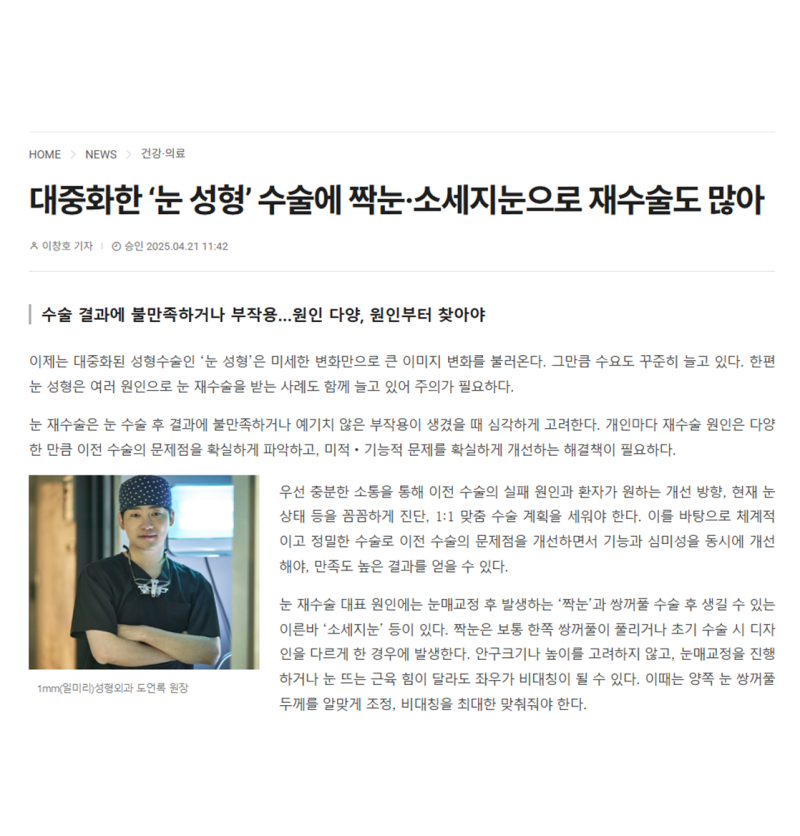
Dr. Do Eon-rok, director of 1mm Plastic Surgery, stated, ‘The key to eye reoperation is meticulously releasing each adhesion of the existing line, making it a surgery where the medical team's experience and skill are extremely important. Especially, the eye has complex structures concentrated in a small area, requiring a high degree of delicacy and concentration.’ He added, ‘To prevent repeated reoperations, it is crucial to have a thorough consultation with a plastic surgeon who has extensive clinical experience regarding your current eye condition and then choose the appropriate surgical method.’
Source, article link: https://www.koreahealthlog.com/news/articleView.html?idxno=51481